Anatomy of a modern B-book.
The B-book has become one of the most misunderstood constructs in retail derivatives. This note is the honest, technical anatomy — what it is, what it is not, and what AI actually changes.
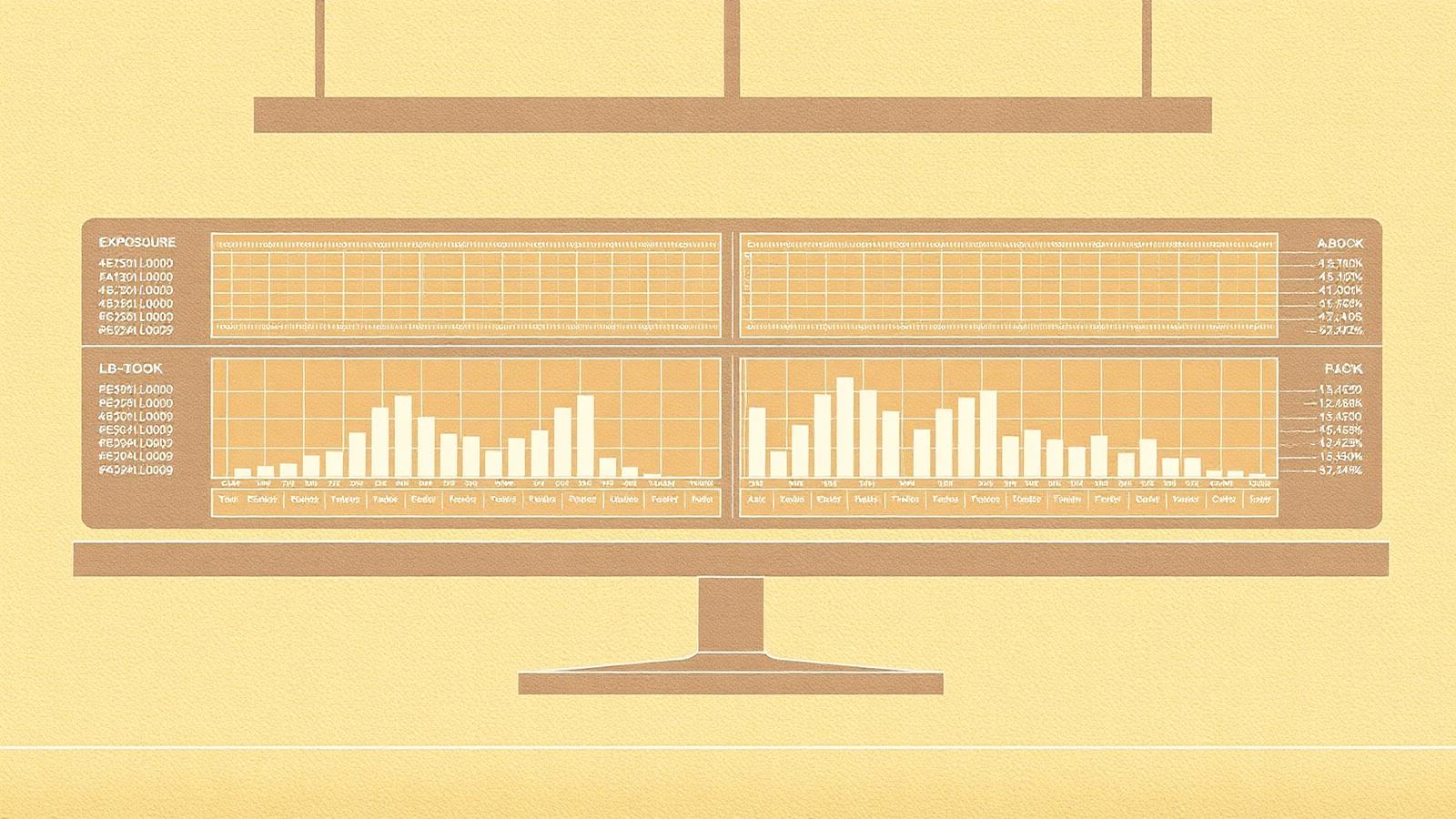
Ask ten people in this industry what a B-book is and you will get ten different answers, most of them wrong. The version I hear most often — 'the B-book is where the broker makes money when the client loses' — is the marketing critique of B-books, not a technical description of what they are.
This note is the technical anatomy. If you run a broker, you already know most of what is here; the value is in the framing. If you are a vendor or regulator, this is the picture you should hold in your head.
The book is a portfolio
The B-book is not a bucket. It is a portfolio of unhedged exposures the broker has taken across clients, instruments, tenors and correlations. Every position in it has an expected P&L that depends on the client's markout distribution, the instrument's volatility profile, the session state, and correlations to other unhedged positions. The dealer's job is not to 'bet against the client' — it is to run the portfolio.
Where AI actually changes the shape
AI does not change whether the B-book exists or should exist. It changes the resolution at which it is managed. Pre-AI, a dealer approximated expected markout with a handful of client segments and a few instrument groups. Post-AI, a dealer works with per-client, per-instrument, per-session expected markouts, updated on live evidence, with a copilot surfacing outliers with reasoning.
The economic consequence is that the ceiling on a well-run B-book is materially higher and the floor is meaningfully safer. Brokers that shipped this shape in 2025 opened per-trader-economics gaps that competitors are only now noticing.
What good actually looks like
- Per-client markout distributions, updated on every trade.
- Per-instrument volatility profiles, tuned to the broker's actual client base rather than a generic model.
- Session-state context (open, mid-session, close, macro release windows) as an input, not an afterthought.
- Correlation-aware exposure across FX, indices, crypto, commodities.
- A dealer copilot as the single surface — every recommendation has a reason, every override becomes training data.
What good does not look like
A vendor black box making autonomous routing decisions. A rule set frozen at the launch of the RMS module three years ago. A dealer working from a spreadsheet at 2am because the exposure alert threshold is set at generic. Every one of these is a specific failure mode I have seen in production.
FAQ
Is running a B-book legitimate?
In every major regulated jurisdiction, yes, with disclosure requirements and best-execution obligations. The critique is about behaviour inside the envelope, not the envelope itself.
Does AI make the B-book more aggressive?
It makes it more accurate. The consequence is a higher ceiling and a safer floor — not a more predatory posture.
Compliance posture?
Stronger than manual. Every routing decision has reasoning, versioned and audit-logged.
Vendor vs bespoke?
Bridge + RMS vendors provide plumbing. Firm-specific AI provides the portfolio management. Both are needed.
Timeline to ship this?
Eight weeks in the KJ Capital Dealing Desk AI productised build.
Want this rigour applied inside your firm?
Start with the free 5-minute AI Readiness Score, or go straight to the £15k Financial AI Diagnostic — a two-week engagement that produces a costed build plan mapped to your regulator, your stack and your P&L.